
The New Procurement Scorecard 2026: Moving Beyond Cost Cutting to True Value Creation
For decades, procurement success was measured by a single number: Cost Savings. The logic was simple — buy cheaper, score higher. But in 2026, that approach is no longer just outdated; it’s actively dangerous.
Geopolitical instability, persistent inflation, trade wars, and rapid technological disruption have fundamentally changed the rules of the game. Organizations still running on a cost-only procurement mindset are unknowingly building structural weakness into their supply chains — one “best price” negotiation at a time.
Leading global consultancies agree: procurement is entering a “Fundamental Reset” era. Cost savings remain important, but they are table stakes, not a competitive edge. Global leading organizations have transformed the role of procurement from a mere ‘cost cutter’ into a ‘Value Engine’ — a mechanism that generates value, drives innovation, and connects all parts of the organization for sustainable competitiveness.
This article introduces The New Procurement Scorecard — a strategic framework for 2026 that Pantavanij believes will help your organization build sustainable competitive advantage through smarter, more strategic procurement.
Why the Old Procurement Scorecard Is Failing Modern Businesses
The Hidden Risks of Cost-Only KPIs
Measuring procurement purely by cost savings creates dangerous blind spots:
- Cheapest today = highest risk tomorrow: Squeezing suppliers on margins leaves them unable to invest in quality, R&D, or capacity — setting organizations up for shortages and quality failures down the line.
- No resilience measurement: Traditional scorecards don’t ask: “How well did procurement respond when crisis hit?”
- ESG blind spot: In an era where investors, customers, and regulators increasingly scrutinize supply chain ethics and sustainability, a cost-only approach is a strategic liability.
Signs Your Organization Needs a New Scorecard
Check whether your organization shows these warning signs:
✅ Procurement is brought into strategic discussions after decisions are made, not before
✅ KPIs focus only on cost savings with no measurement of Supplier Innovation or Risk Management
✅ Suppliers feel “squeezed” rather than genuinely partnered with
✅ When Supply Chain Disruptions occur, your team is always in reactive mode
✅ No data analytics system exists to predict supply risks proactively
If you checked three or more: it’s time to reset your Procurement Scorecard.
What Is the New Procurement Scorecard?
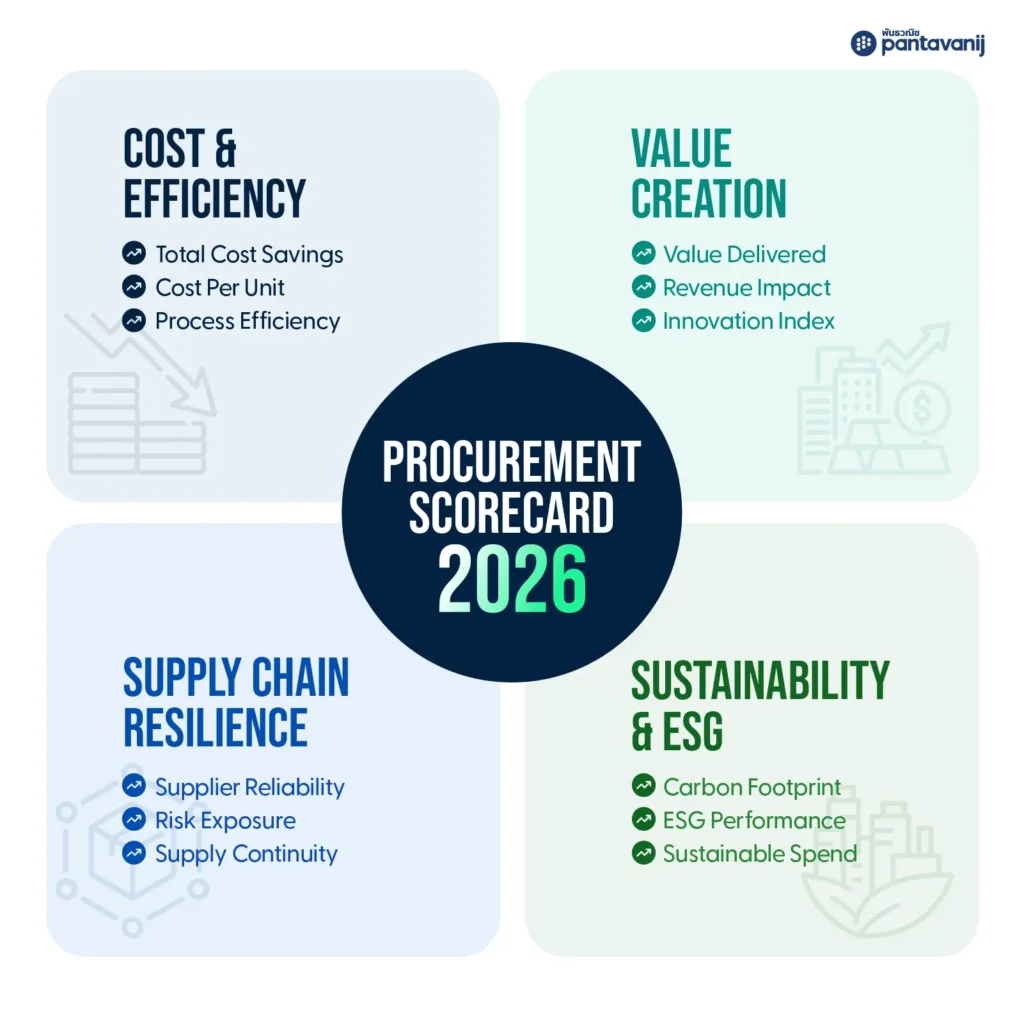
The New Procurement Scorecard doesn’t eliminate cost measurement — it expands performance visibility across four strategic dimensions:
|
Dimension |
Example KPIs |
Why It Matters |
| Cost & Efficiency | Cost Savings %, Total Cost of Ownership (TCO) | Foundation to maintain |
| Value Creation | Revenue impact, Innovation contribution | Procurement creates value beyond savings |
| Supply Chain Resilience | Supplier diversification score, Recovery time | Ability to withstand real-world disruption |
| Sustainability & ESG | Supply chain carbon footprint, % ethical suppliers | Meeting modern stakeholder expectations |
💡 Pantavanij Insight: Organizations that adopt a multi-dimensional Procurement Scorecard recover from Supply Chain disruptions up to 40% faster than those using cost-only KPIs.
3 Procurement Strategies to
Become a Value Creator in 2026
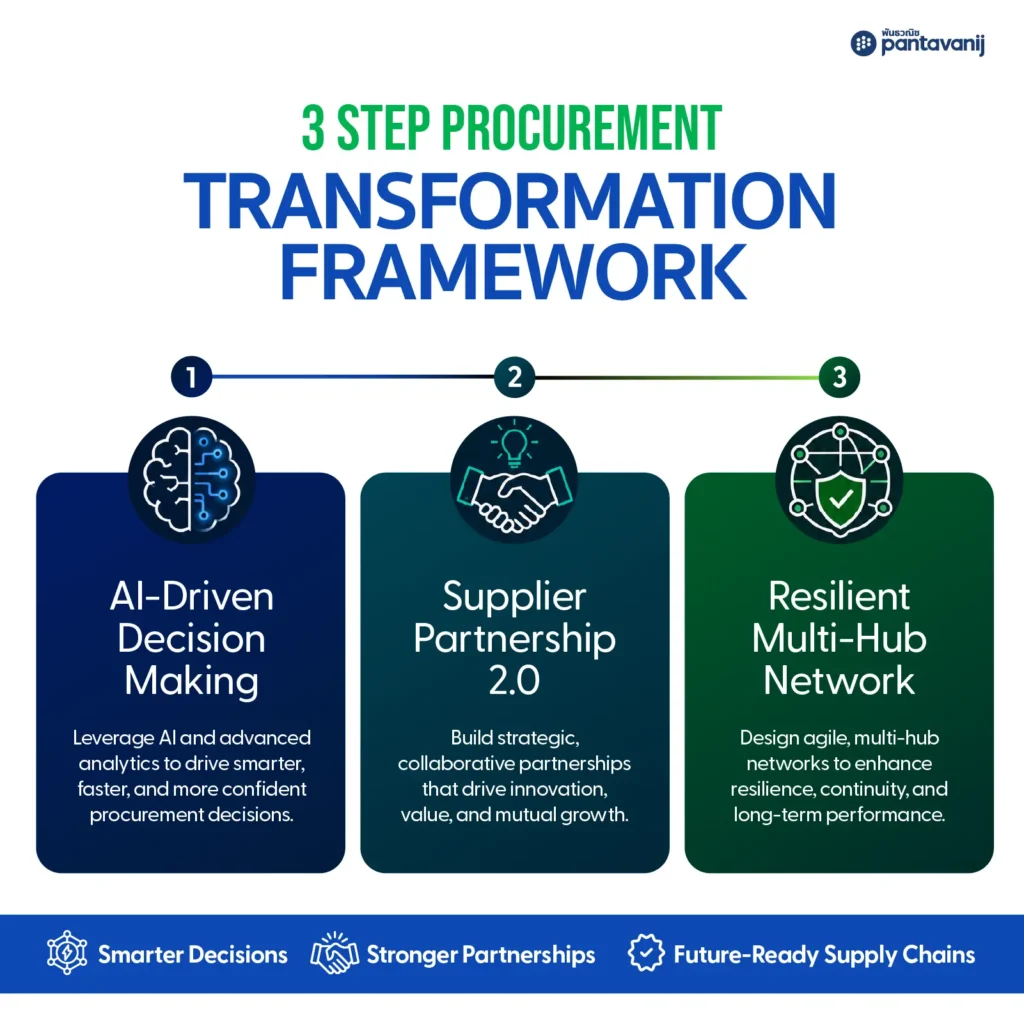
Strategy 1 — AI-Driven Decision Making
Modern procurement demands the ability to analyze trade-offs across cost, risk, quality, and sustainability — simultaneously, in real time.
Key Actions:
- Deploy Data Analytics and AI to forecast commodity prices and demand signals
- Build a Spend Visibility Dashboard with real-time supply chain insights
- Implement an e-Procurement Platform that auto-connects supplier data with purchase history
Expected Outcome: Faster, more accurate procurement decisions — reducing errors, cutting cycle time, and surfacing new value creation opportunities.
🔗 Learn how Pantavanij’s e-Procurement platform supports smarter decisions
Strategy 2 — Supplier Relationship Management 2.0
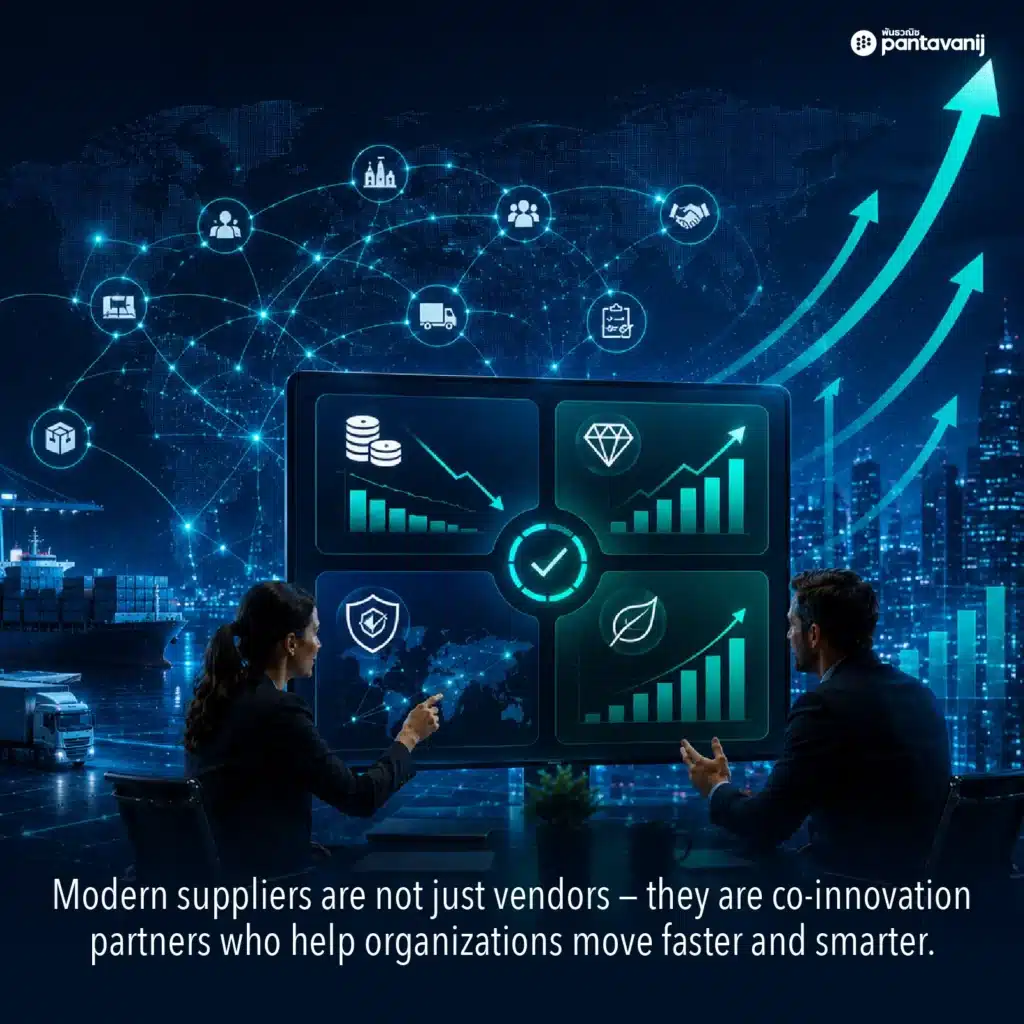
In 2026, suppliers are not just vendors — they are Innovation Hubs. Companies like Apple, Toyota, and Unilever consistently outperform peers by cultivating deep, collaborative supplier partnerships.
Approaches Adopted by Leading Organizations:
- Supplier Innovation Workshops: Hosting collaborative ideation sessions with suppliers to uncover mutual opportunities for product and process development.
- Two-Way Supplier Scorecards: Implementing a mutual feedback system that allows suppliers to evaluate the organization as well, building a relationship rooted in trust.
- Production Forecast Sharing: Sharing production plans and forecasts with key partners in advance to ensure alignment and synchronized planning for both parties.
- Preferred Supplier Programs: Designing a program that prioritizes partners who deliver long-term value, while maintaining balanced and fair pricing.
Expected Outcome: Faster speed to market, higher product quality, and a steady stream of innovation ideas from your supply base.
Strategy 3 — Building a Resilient Multi-Hub Supply Network
With trade tariffs and geopolitical risk showing no signs of disappearing, dependence on single-source or single-country suppliers is a risk organizations can no longer afford.
Multi-Hub Network Roadmap:
- Risk Mapping: Identify all items where more than 60% of supply comes from a single source
- Regional Diversification: Explore suppliers across ASEAN, South Asia, and Eastern Europe to spread risk
- Smart Buffer Stock Management: Use analytics to calculate Safety Stock levels that protect against disruption without inflating Working Capital
- Alternative Supplier Pre-Qualification: Every critical item should have a pre-qualified backup supplier ready to activate
Expected Outcome: Significantly reduced impact from supply disruptions, with confidence that production lines will keep running.
New KPIs Every Procurement Leader Should Track in 2026
Value Creation KPIs
- Procurement ROI: Value generated vs. cost of running the procurement function
- Innovation Contribution Rate: % of new product innovations driven by supplier ideas
- Time-to-Market Reduction: Days saved in new product sourcing cycles
Supply Chain Resilience KPIs
- Single-Source Dependency Rate: % of items dependent on a single supplier (lower = better)
- Supplier Financial Health Score: Composite financial health of key suppliers
- Disruption Recovery Time: Time to activate alternative supply when a disruption occurs
Sustainability & ESG KPIs
- Sustainable Spend %: % of procurement budget directed to ESG-compliant suppliers
- Supply Chain Carbon Footprint: CO2 emissions per unit of procurement activity
- Ethical Sourcing Compliance Rate: % of suppliers passing Code of Conduct audits
Frequently Asked Questions (FAQ)
Q: What is a Procurement Scorecard and how does it differ from regular KPIs? A: A Procurement Scorecard is a multi-dimensional performance management system that goes beyond single metrics like Cost Savings. It integrates Value Creation, Resilience, Supplier Relationship, and Sustainability dimensions to provide a holistic view of how procurement contributes to organizational value.
Q: Where should an organization start when redesigning its Procurement Scorecard? A: Start with an audit of your current scorecard — identify which dimensions are missing, then add one to two new KPIs per quarter, starting with the areas that address your organization’s most pressing challenges.
Q: How important is Supply Chain Resilience for SMEs in Thailand? A: Critically important. SMEs often have fewer resources to absorb supply disruptions, making diversification and backup suppliers even more essential — the scale is smaller, but the principles are identical.
Q: How does technology connect to the Procurement Scorecard? A: Technology — especially e-Procurement platforms and Data Analytics — is the key enabler that makes collecting and measuring new KPIs operationally feasible without additional headcount.
Q: How can Pantavanij help with Procurement Scorecard transformation? A: Pantavanij offers both a comprehensive e-Procurement platform and an expert advisory team to support organizations through full Procurement Transformation — from initial assessment through implementation and ongoing optimization.
Sources: Adapted and enhanced from Inverto Procurement Trends 2026 and Procurement Tactics 2026