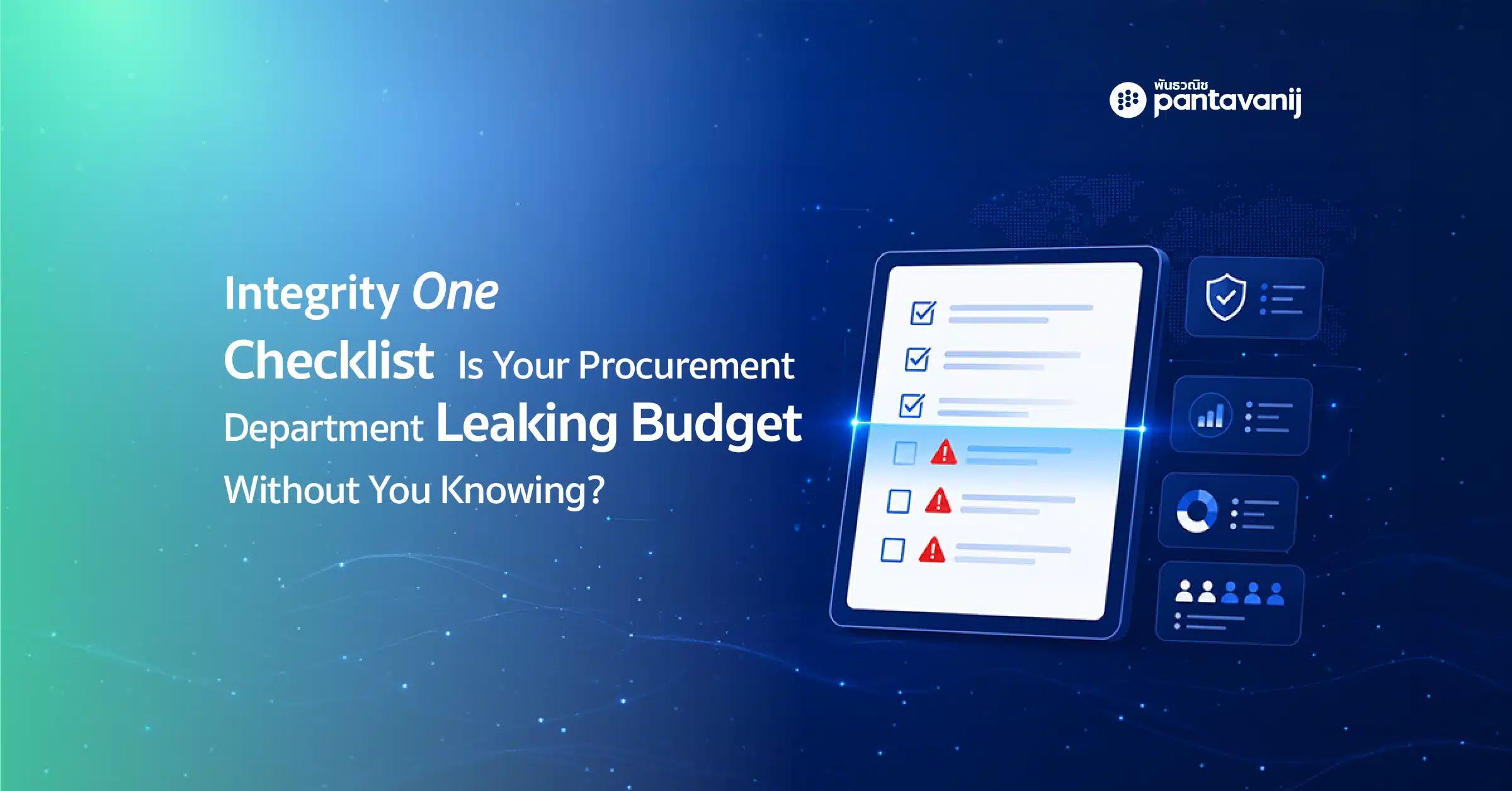
Checklist: Is Your Procurement Department Leaking Budget Without You Knowing?
How confident are you that every purchase in your organization is 100% transparent? In reality, enterprises worldwide lose substantial budgets every year to “hidden costs” and anomalies that slip past human auditors — often because of massive document volumes or outdated, manual review processes.
This article walks through a practical checklist that procurement teams, internal auditors, and executives can apply immediately, to identify whether your organization has “blind spots” that could escalate into major financial issues. We’ll also cover how AI risk detection technology can make audits faster and far more accurate.
Why Is Procurement Fraud So Hard to Detect?
The Hidden Costs You Can’t See
Procurement is one of the highest-volume transactional functions in any organization. Larger enterprises can generate thousands to tens of thousands of purchase orders per month, making it nearly impossible for human auditors alone to catch every anomaly. This gap is exactly where procurement fraud quietly accumulates — often invisible to leadership until the damage is already significant.
The Long-Term Business Impact
Left unchecked, these blind spots don’t just drain budget. They erode trust with shareholders, vendors, and regulators, and increase compliance risk that could lead to legal consequences down the line.
4 Warning Signs That Your Procurement System Is at Risk
If your organization exhibits even one of these behaviors, you’re leaving the door open to financial leakage:
1. Recurring Split Purchases (Split POs)
Dividing purchase amounts specifically to fall below the threshold that requires senior management approval — one of the most common tactics to bypass internal controls.
2. Identical Items Bought at Drastically Different Prices
Without systematic price benchmarking, organizations may unknowingly overpay — a cost that compounds significantly over time.
3. Hidden Connections Between Buyers and Sellers
Undisclosed relationships — shared surnames, matching registered addresses, or common directors — pave the way for conflicts of interest that are difficult to spot manually.
4. Inability to Conduct Timely Retrospective Audits
When issues arise, teams spend too long hunting through scattered documents and can’t reconstruct a clear timeline in time — delaying investigations and risking lost evidence
Seal Every Leak with Integrity One’s Smart AI
Relying solely on human effort to audit thousands of monthly transactions is nearly impossible — and highly prone to human error. This is why Integrity One deploys advanced AI technology as your end-to-end risk-scanning assistant.
24/7 Monitoring
AI continuously analyzes suspicious behaviors and automatically evaluates risk with exceptional precision — no manual review required.
Systematic Case & Investigation Management
Securely stores evidence and maps out clear event timelines, dramatically reducing investigation time.
Executive Dashboard Visibility
Real-time status updates and instant estimates of potential budget leakage, helping executives make faster, better-informed decisions.
🔗 Explore all Integrity One features
How Is Integrity One Different from Traditional Audit Systems?
Unlike traditional sampling audits that only review a fraction of total transactions, Integrity One applies Full Population Testing — using AI algorithms trained on your organization’s specific risk behaviors. This catches anomalies that legacy systems miss entirely, while cutting audit turnaround from weeks to minutes.
How to Get Started with Integrity One
- Assess data readiness — Review your existing procurement systems and data.
- Connect your systems — Integrate your ERP or legacy procurement platform with Integrity One.
- Configure risk rules — Tailor detection logic to your organization’s specific risk context.
- Scan and monitor via Dashboard — Receive real-time alerts the moment anomalies are detected.
Frequently Asked Questions (FAQ)
Q1 : What size of organization is Integrity One suitable for?
A : It fits organizations of any size with high procurement transaction volumes — particularly mid-to-large enterprises processing hundreds to tens of thousands of POs monthly that want to strengthen governance and transparency.
Q2 : How long does implementation take?
A : Timelines depend on the complexity of your existing ERP and data volume, but most organizations can connect systems and see initial scan results within a few weeks.
Q3 : How does Integrity One detect Split POs?
A : The AI analyzes ordering patterns from the same requester and vendor within close time windows. If it detects amounts split specifically to bypass approval thresholds, it flags the activity immediately.
Q4 : Is detected data kept secure?
A : Integrity One is built to enterprise-grade data security standards, with a fully traceable audit trail to support formal investigations when needed.
Q5 : Do we need a dedicated IT team to manage the system?
A : No. The Integrity One team provides technical support throughout the process — from system integration to ongoing maintenance.
Transform Risk into Tangible Transparency
Ensuring transparency isn’t about catching wrongdoers — it’s about protecting the organization’s core financial interests. Don’t wait for damage to escalate and impact your corporate reputation. Deploying an intelligent system like Integrity One builds the strongest, most sustainable shield for modern procurement.