What Is a Procurement System?
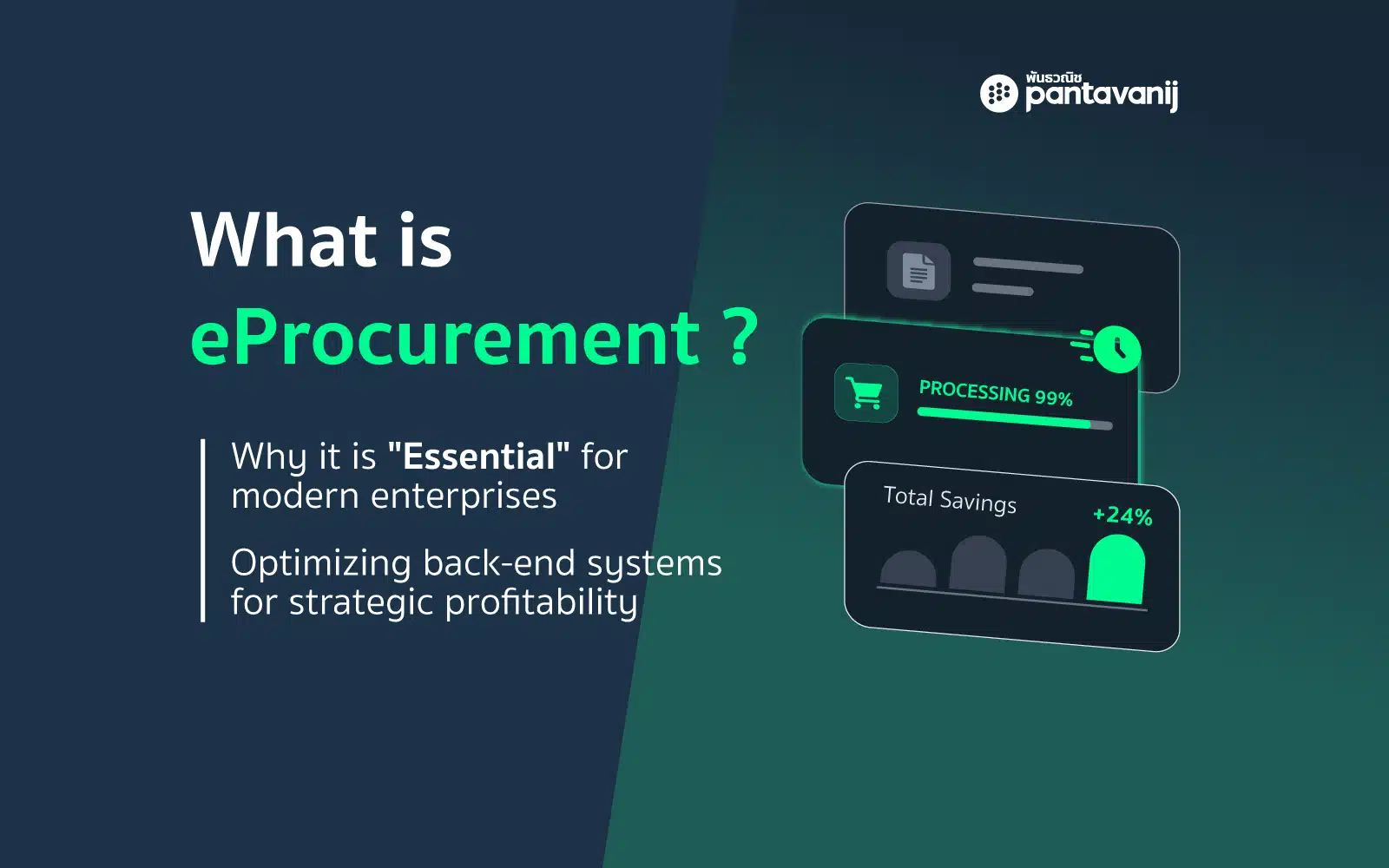
A procurement system refers to the processes and tools that organizations use to manage the purchasing of goods and services, from identifying requirements and selecting suppliers, to requesting quotations, approving purchases, managing contracts, and conducting post-purchase performance evaluation.
In the past, these processes were commonly handled through spreadsheets, emails, or fragmented workflows across different departments. Such practices often resulted in delays, limited transparency, and difficulties in controlling costs. Today, organizations are increasingly adopting digital procurement systems to enhance operational efficiency and establish more structured procurement management.
What Is eProcurement and How Is It Different from Traditional Purchasing?
Many organizations are familiar with the term eProcurement, yet may not fully understand its overall scope and strategic value.
So, what is eProcurement?
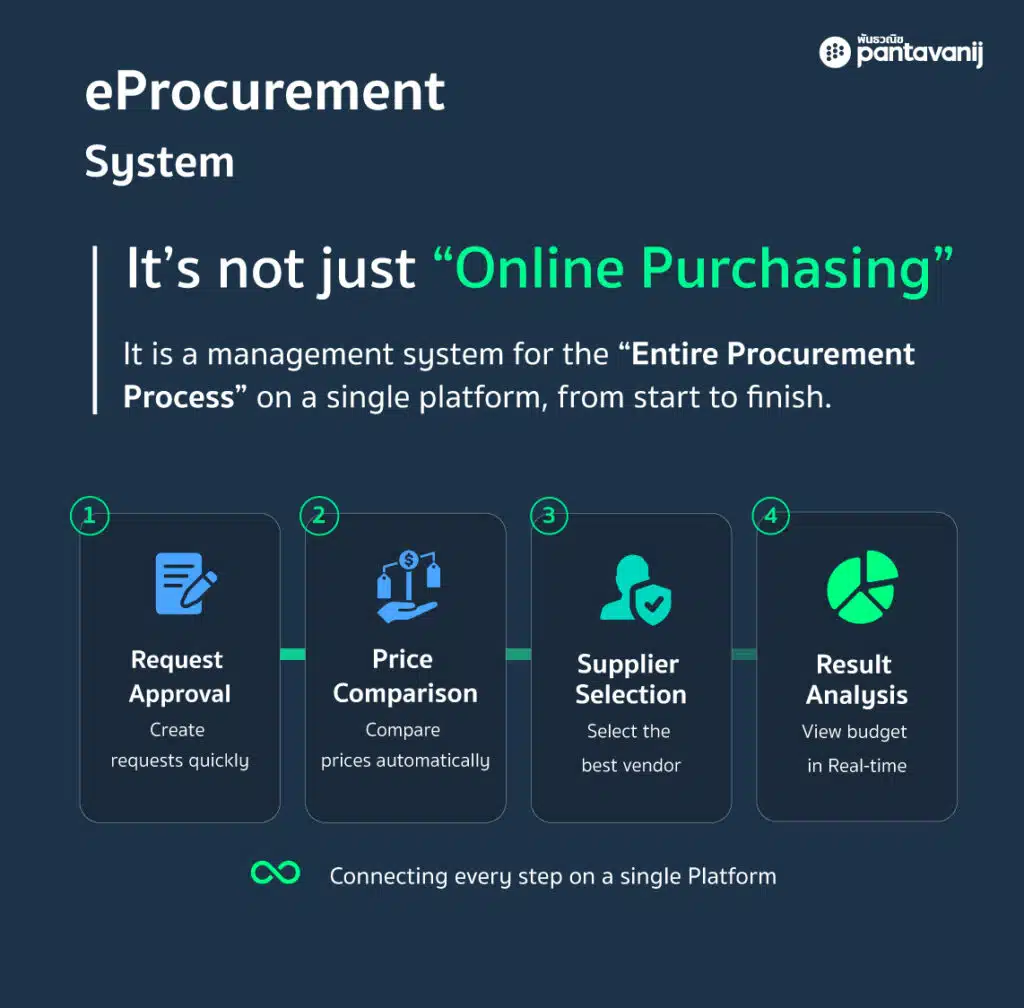
eProcurement refers to an online procurement system that leverages digital technology to manage the entire purchasing process on a single integrated platform. It covers activities ranging from approval workflows and quotation requests to supplier selection, contract management, and post-purchase data analysis.
An eProcurement system is therefore not merely a tool for online purchasing. Rather, it serves as a fundamental infrastructure that enables organizations to manage costs, risks, and operational performance in a systematic manner.
Key Differences Between Traditional Procurement and eProcurement
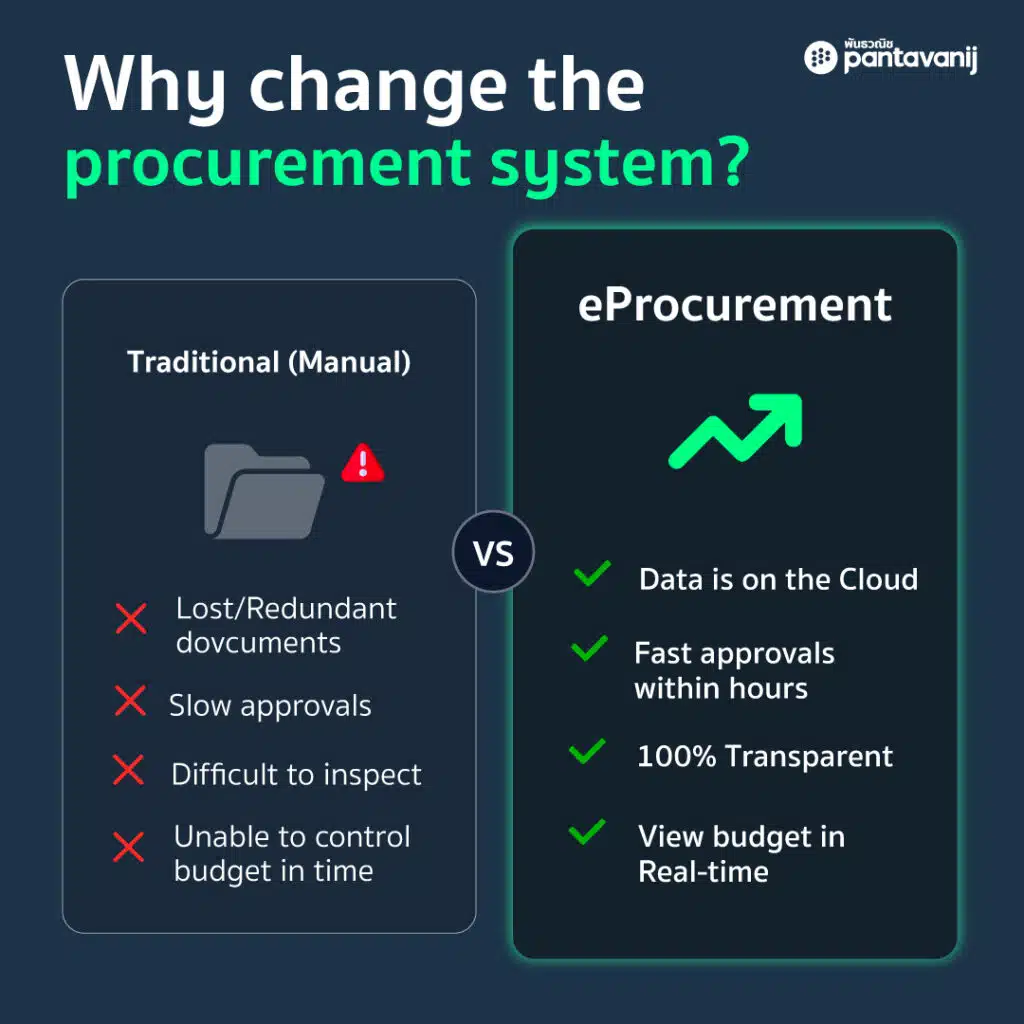
Under traditional procurement models, organizations often rely on spreadsheets, emails, and manual coordination among multiple departments. This approach may lead to several challenges, including:
- Loss of documents or inconsistencies between different versions
- Delays in approval due to multi-layered processes
- Lack of reliable audit trails
- Limited real-time budget visibility
- Increased risks of errors and non-transparency
In contrast, eProcurement systems consolidate all procurement activities into a unified digital platform. Information is systematically stored, easily traceable, and automatically connected across processes.
Practical Examples of Implementation
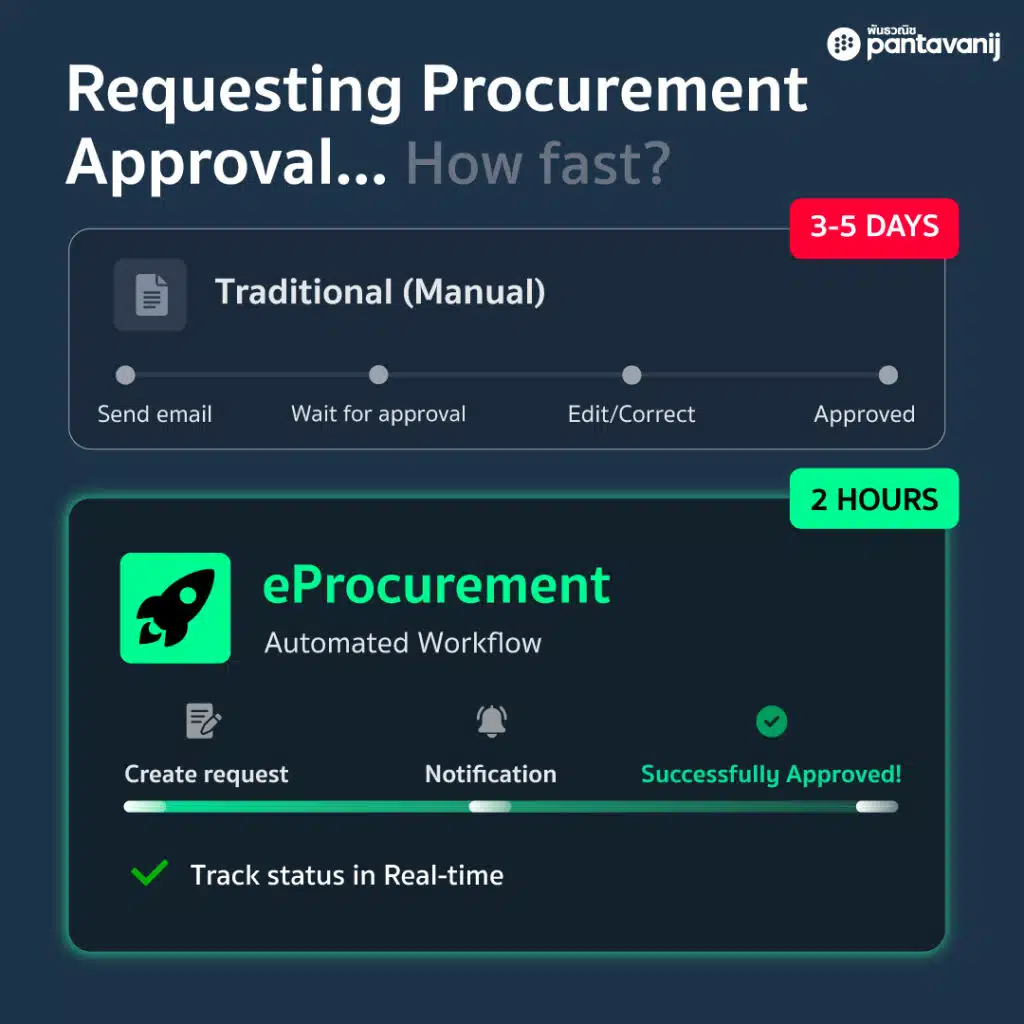
Example: Purchase Approval
Traditional Approach:
Procurement staff send documents via email → wait for managerial approval → revise multiple times → process takes several days
eProcurement Approach:
Create purchase requests in the system → automated notifications → real-time status tracking → approval within hours
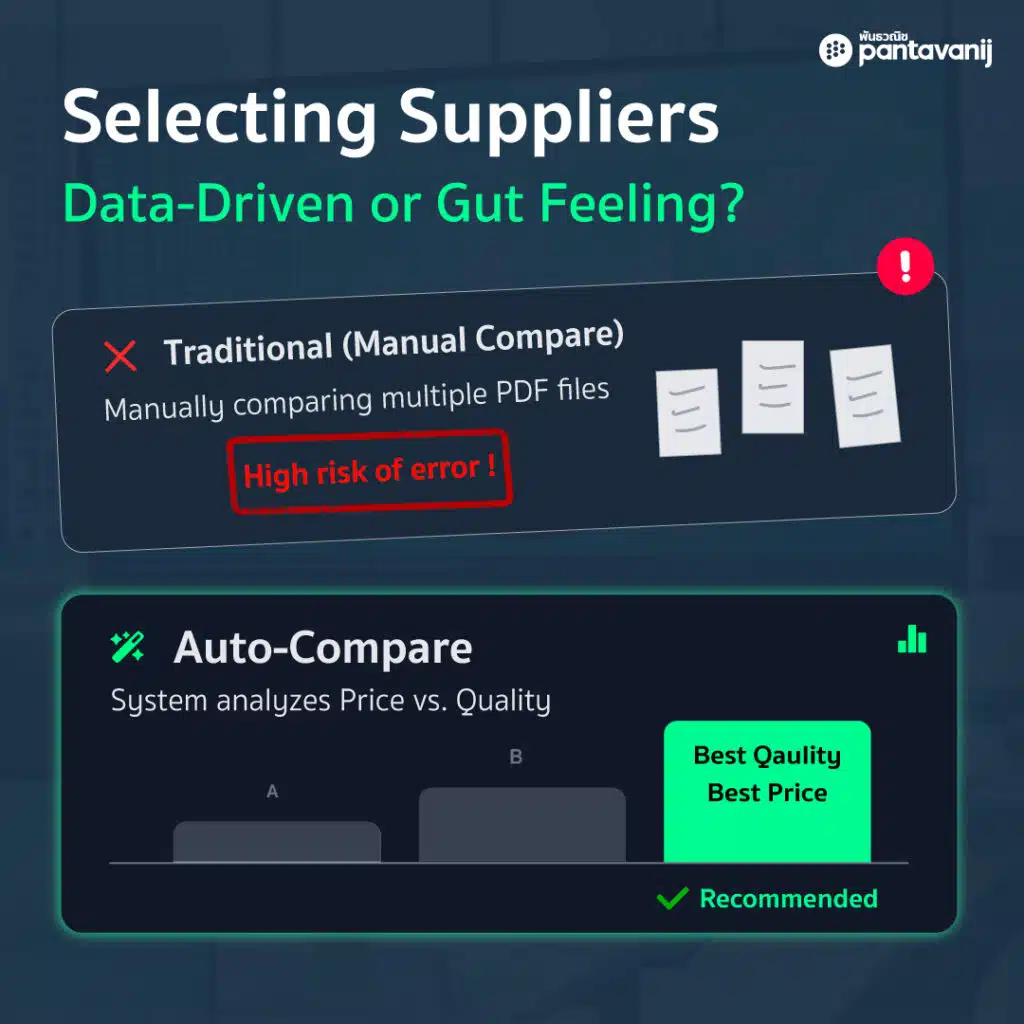
Example: Supplier Comparison
Traditional Approach:
Collect quotations from multiple files → manually compare → high risk of human error
eProcurement Approach:
Automated comparison of prices, quality, and contractual terms → more accurate and informed decision-making
Example: Budget Control
Traditional Approach:
Spending data becomes visible only after budget closure → corrective actions are delayed
eProcurement Approach:
Real-time spending visibility → immediate budget adjustment and planning
Organizational Procurement Processes: From Back Office to Strategic Mechanism
From a modern perspective, organizational procurement processes are no longer merely operational tasks. They have become critical mechanisms that directly influence financial performance, risk management, and long-term sustainability.
A structured procurement system enables organizations to:
- Control budgets with greater accuracy
- Reduce risks associated with low-quality suppliers
- Comply with governance principles and legal requirements
- Support executive decision-making with reliable, data-driven insights
As a result, modern organizations increasingly regard procurement as a strategic function rather than a supporting role.
Why Modern Organizations Cannot Operate Without a Procurement System
In today’s rapidly changing business environment, characterized by cost volatility and increasingly complex supply chains, the absence of standardized procurement systems can expose organizations to significant hidden risks.
An effective procurement system enables organizations to:
- Systematically manage operational and financial risks
- Enhance transparency and organizational credibility
- Reduce long-term procurement and operational costs
- Establish sustainable competitive advantages
More importantly, these systems form the foundation for future Digital Procurement Transformation.
Procurement Systems and the Future of Organizations
Modern procurement systems extend far beyond transactional processing. They are evolving into intelligent platforms that integrate artificial intelligence, data analytics, and risk management capabilities.
Organizations that establish structured procurement systems today will be better positioned to:
- Adapt effectively to market changes
- Scale their operations efficiently
- Achieve long-term sustainability
Procurement systems represent the core of organizational management in the digital era. The implementation of online procurement and eProcurement solutions not only enhances operational efficiency, but also elevates procurement into a strategic engine that drives transparency, standardized governance, and sustainable organizational growth.