
3 Common Myths About eAuction That Are Costing Your Organization Money
When it comes to cutting procurement costs, eAuction (online bidding) is one of the most powerful tools that leading organizations worldwide have adopted. Yet many companies still hesitate to move away from traditional negotiation models — often due to misconceptions that simply aren’t true.
Today, we’re debunking 3 of the most common myths about eAuction that may be holding your organization back from achieving real, measurable savings.
Why Are So Many Organizations Still Afraid of eAuction?
eAuction has been used in global procurement for over two decades. Yet in many markets, organizations continue to rely on traditional negotiation methods — largely because of misinformation and outdated perceptions. Let’s set the record straight.
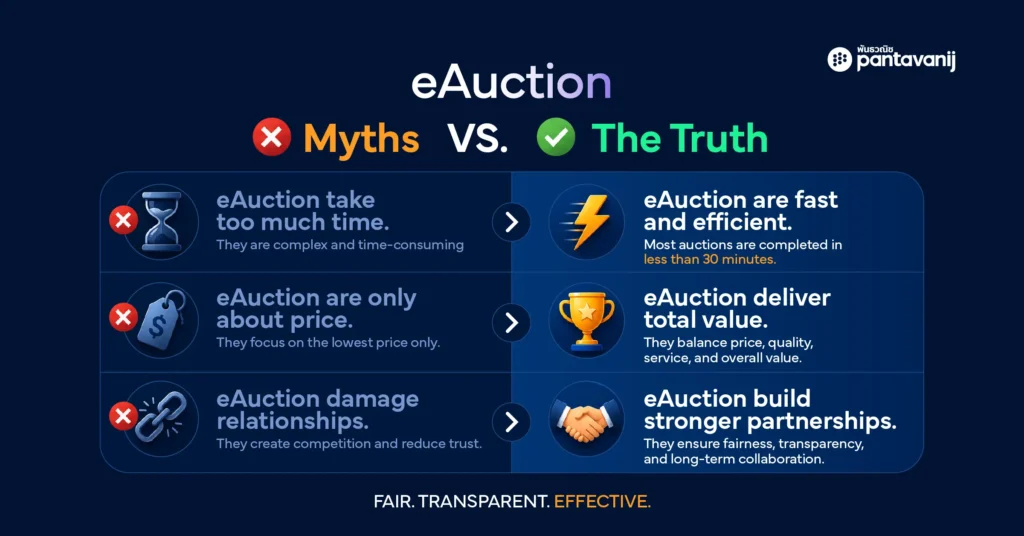
Myth #1: eAuction Is Complicated and Takes Forever to Set Up
Where This Myth Comes From
Many procurement teams assume that switching to a digital bidding platform requires significant resources — time, budget, IT infrastructure, and extensive training. There’s also a common fear that suppliers won’t be ready to participate in a new system.
The Truth
Online bidding doesn’t have to be complicated — especially when you have the right partner. Pantavanij’s eAuction platform comes with a full team of experts who manage the entire process End-to-End: from event design and supplier invitation, all the way to result analysis.
Key facts:
- Know the winner within 30 minutes of the auction closing
- Reduce procurement process complexity by up to 70%
- No software installation required — runs entirely in a web browser
💡 Expert Tip: Your first eAuction event may take 1–2 weeks to prepare. But once you’re up and running, subsequent events can be set up in just a few days.
→ Read more: How to Get Started with eAuction — A Step-by-Step Guide
Myth #2: Lowest Price Means Lowest Quality
Where This Myth Comes From
This is perhaps the most pervasive concern. Procurement teams who have previously selected suppliers purely on price — only to receive substandard goods or services — often assume that eAuction is just a race to the bottom.
The Truth
eAuction is not just about the lowest price. Pantavanij’s platform supports Multi-Variable Auctions, which evaluate suppliers across multiple dimensions — not price alone — using the Price Per Performance (PPP) methodology.
How Price Per Performance works:
- Each supplier is scored on performance criteria before the auction begins (e.g., product quality, warranties, delivery track record, certifications)
- These scores are factored into the bid price, generating an Adjusted Price for each supplier
- The system ranks suppliers by best value, not just lowest price
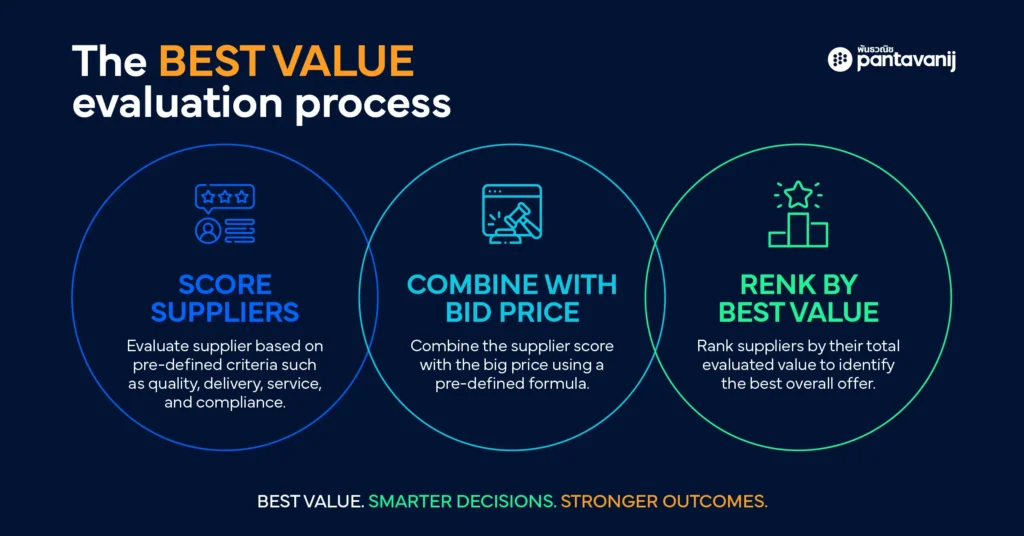
The result: your organization gets the best-fit product or service at the optimal price — not simply the cheapest option.
💡 Case Study: A leading Thai manufacturer using Multi-Variable eAuction for raw material procurement found that the winning supplier was NOT the one with the lowest bid price — but the one with the highest PPP score. The result was 18%+ in long-term total cost savings.
→ Read more: What Is Multi-Variable eAuction and How Does It Work?
Myth #3: eAuction Damages Supplier Relationships
Where This Myth Comes From
Many procurement teams have long-standing relationships with trusted suppliers and worry that introducing eAuction will make them feel distrusted or forced into an unfair competition, ultimately damaging partnerships built over years.
The Truth
In reality, eAuction builds transparency — which is exactly what most suppliers want. A fair, structured, and visible process is far more relationship-preserving than opaque back-room negotiations.
Pantavanij’s platform is designed for fairness:
- All suppliers compete under equal conditions and identical terms
- Only the leading price is displayed — competitor identities are hidden (shown as a “hammer” icon)
- Every step is recorded and auditable, reducing ethical risk in procurement
When suppliers understand the rules and see that the process is fair, they consistently report higher satisfaction with the outcome — even when they don’t win.
💡 Insight: Research from the Aberdeen Group found that organizations using eAuction consistently are better at retaining high-quality suppliers than those using traditional negotiation — because strong suppliers prefer transparent, merit-based competition.
→ Read more: How to Communicate eAuction to Your Suppliers for the First Time
Stop Letting Myths Cost You Savings
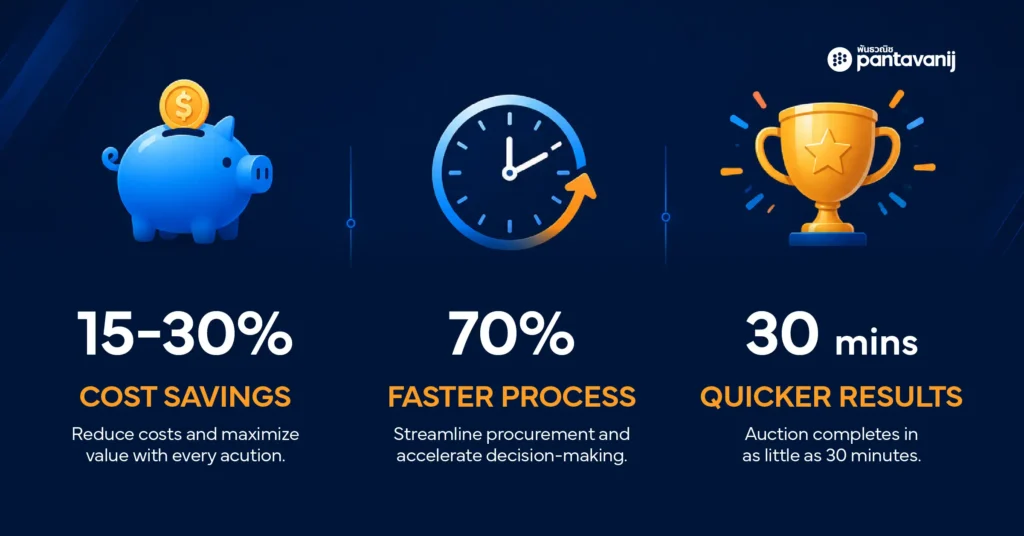
Don’t let outdated beliefs block your path to real cost reduction. Transitioning to eAuction doesn’t just help you save 15–30% on procurement costs — it also elevates transparency standards and dramatically reduces time spent on purchasing processes.
It’s time for your procurement team to embrace technology and build a genuine competitive advantage.
What you get with Pantavanij eAuction:
- 15–30% average savings per auction event
- Up to 70% reduction in procurement process time
- Results delivered in as little as 30 minutes
- 100% transparent and fully auditable process
- Supports both Reverse Auction and Multi-Variable Auction formats
→ Read more: eAuction vs. Traditional Negotiation — A Full Comparison
FAQ: Frequently Asked Questions About eAuction
Q1: Is eAuction suitable for small organizations?
A: eAuction is suitable for organizations of any size that have recurring procurement processes with meaningful spend. As a general guideline, it’s most cost-effective for events valued at THB 500,000 or more. Pantavanij’s experts can assess suitability for your organization at no charge.
Q2: Do suppliers need to install special software to participate?
A: No. Suppliers can participate in the auction directly through any standard web browser. Pantavanij’s platform is designed to be intuitive, and a support team is available throughout the bidding process.
Q3: Is pricing data in eAuction kept confidential?
A: Yes. Each supplier can only see their own competitive position (e.g., “You are ranked 2nd”) — they cannot see the actual prices submitted by other bidders. This ensures a fair and secure process for all parties.
Q4: What’s the difference between Reverse Auction and Multi-Variable Auction?
A: A Reverse Auction evaluates price as the sole variable — best suited for commodity goods with clear specifications. A Multi-Variable Auction incorporates quality scores, service terms, and other criteria into the evaluation — ideal for complex goods or services where balancing price with performance matters.
Q5: What types of procurement is eAuction suitable for?
A: eAuction can be applied across a wide range of categories including raw materials, packaging, transportation and logistics, IT services, utilities, facility management, MRO supplies, and even capital expenditure (Capex) procurement.
Q6: Can our organization reject the auction result if we’re not satisfied?
A: Yes. eAuction is a structured price-discovery process — not a binding commitment. Your procurement team retains full decision-making authority and can choose to accept or decline the outcome based on internal considerations.